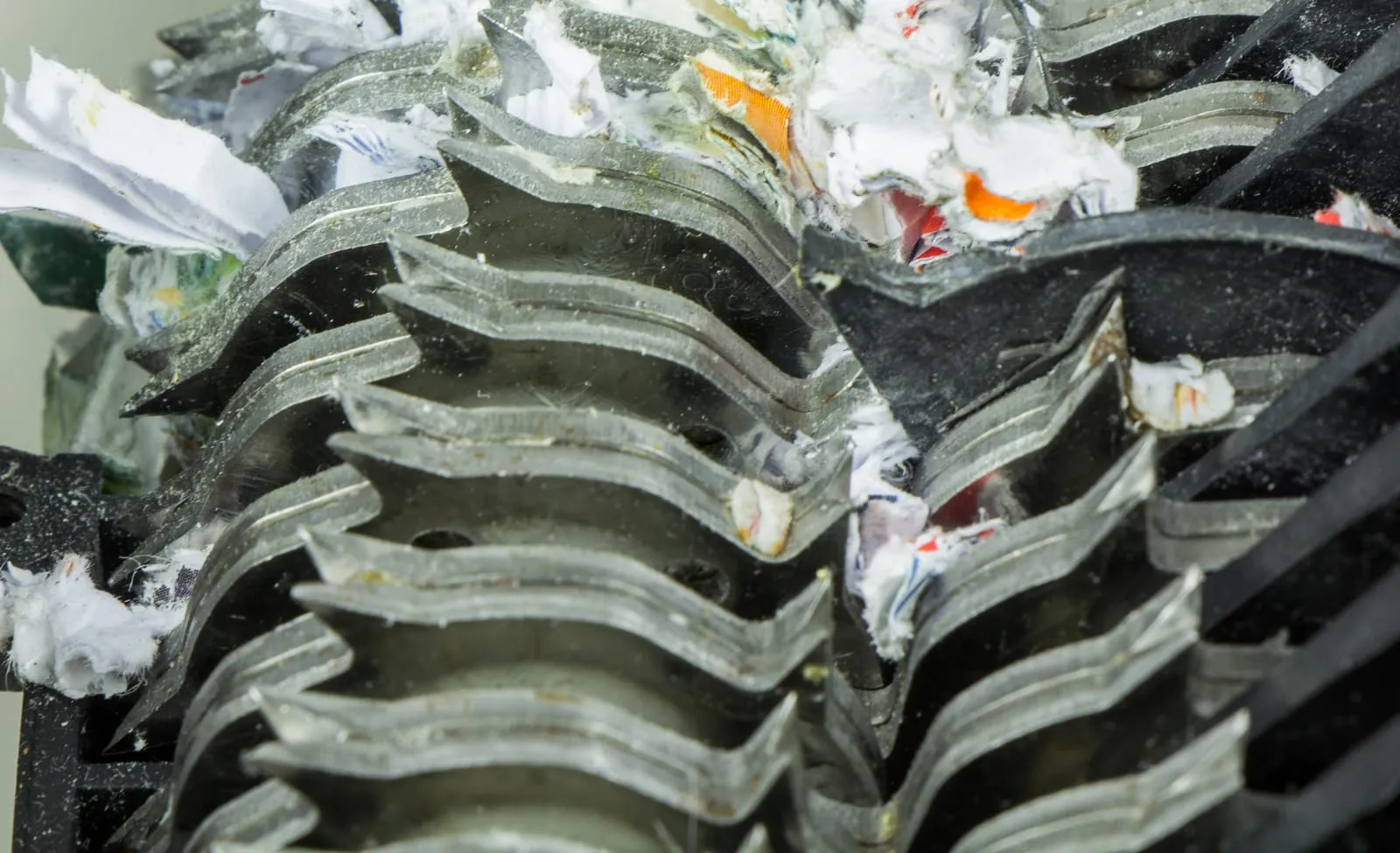

Quick answer: the FTC tells people to shred papers with personal information before throwing them away [1], and a home shredder makes that a two-minute habit. Pick a cross-cut or micro-cut model, not a strip-cut one, and match the sheet capacity and run time to how much paper you have. For most households, a 10-sheet micro-cut model covers daily mail; a heavy-duty or auto-feed model makes sense for a once-a-year cleanout of old statements and tax papers.
At a glance
- What the FTC says to shred
- ATM receipts, credit offers, cleared checks after 14 days, credit reports, expired IDs and cards [2]
- What to keep, not shred
- Social Security cards, birth certificates, passports and wills, stored securely [2]
- No shredder?
- A community shred day, or a marker to black out account numbers [1]
- Child safety
- Never let children run a shredder, even with an adult watching [3]
- If your identity is stolen
- Report it at IdentityTheft.gov for a recovery plan [1]
How we chose
We picked these shredders from what their makers publish about each model. We didn’t test them ourselves.
- Cut type and security level. Every pick is cross-cut or micro-cut and rated P-4 by its maker [5][6][7][8][9]. We list the particle size or particles per sheet where the maker gives one.
- Run time and bin size. A small shredder that needs a 30-minute rest after 3 minutes [5] is fine for daily mail but slow for a box of old files. We list each maker’s run time where it’s published.
- Child safety features. The CPSC says newer shredders are designed to keep children’s fingers out of the opening [3]. We note which models have a sensor or lock that stops the cutters.
- No recall. We searched the CPSC recall database for each brand and model on November 6, 2026, and found no recall for any pick [4].
Our picks
Best for: Occasional shredding of mail and receipts
Amazon Basics 8-Sheet Cross-Cut Paper and Credit Card Shredder
It's a basic cross-cut shredder for a few pieces of mail at a time. It takes up to 8 sheets per pass plus credit cards, staples and small paper clips, and it shuts itself off if it runs past its limit to prevent overheating [5].
- Cross-cut, about 5 x 18 mm pieces; P-4 per Amazon Basics [5]
- Up to 8 sheets of 20-pound paper per pass [5]
- 3-minute run time, 30-minute cool-down [5]
- 3.7-gallon bin; auto, off, reverse and forward switch [5]
Safety check: No CPSC recall found for this model or for Amazon Basics shredders (checked 2026-11-06).
Watch out: Credit cards go in one at a time, and Amazon says it isn't suitable for metal cards [5]. The short run time makes it a poor fit for big cleanouts.
See it on Amazon → We chose it from specs and safety records; we haven't tested it ourselves.
Best for: A quiet micro-cut shredder next to a desk
Fellowes Powershred 60MC Micro-Cut Shredder
It cuts 10 sheets per pass into 5/32-by-1/2-inch micro-cut pieces and runs for up to 7 minutes before it needs to cool down. Fellowes says it reverses automatically if paper starts to jam and has a safety lock that disables it [6].
- Micro-cut, 5/32 x 1/2 inch; P-4 per Fellowes [6]
- 10 sheets per pass; also takes staples, paper clips and credit cards [6]
- Up to 7 minutes of continuous shredding [6]
- 5-gallon bin; auto reverse; safety lock [6]
Safety check: No CPSC recall found for this model or for Fellowes shredders (checked 2026-11-06).
Watch out: The listing names a safety lock but not Fellowes' SafeSense hand sensor, so keep it out of children's reach [3].
See it on Amazon → We chose it from specs and safety records; we haven't tested it ourselves.
Best for: Several people sharing one shredder, or regular heavy use
Fellowes Powershred 79Ci 100% Jam Proof Cross-Cut Shredder
It takes 16 sheets per pass and runs for up to 20 minutes before cooling down, so you can get through a stack in one sitting. It also shreds CDs and DVDs, and Fellowes says it senses and powers through tough jobs to prevent jams [7].
- Cross-cut, 5/32 x 1-1/2 inch pieces, about 397 per sheet; P-4 per Fellowes [7]
- 16 sheets per pass; also staples, paper clips, credit cards, CDs and DVDs [7]
- Up to 20 minutes of continuous run time [7]
- 6-gallon pull-out bin with a bin-full light [7]
Safety check: No CPSC recall found for this model (checked 2026-11-06). The listing describes Fellowes' SafeSense sensor, which stops the shredder when hands touch the opening, but labels it a feature of select models [7]; check the box before you count on it.
Watch out: Its pieces are longer than a micro-cut model's: about 397 per sheet versus about 1,257 for the LX220 below [7][8].
See it on Amazon → We chose it from specs and safety records; we haven't tested it ourselves.
Best for: Clearing out years of old statements
Fellowes Powershred LX220 Micro-Cut Shredder
It's the largest manual-feed pick: 20 sheets per pass into about 1,257 micro-cut pieces per sheet, with an 8-gallon bin. Fellowes lists its SafeSense sensor, which stops shredding when hands or paws touch the paper entry [8].
- Micro-cut, about 1,257 particles per sheet; P-4 per Fellowes [8]
- 20 sheets per pass; also staples, paper clips and credit cards [8]
- SafeSense hand sensor; 100% Jam Proof system [8]
- 8-gallon bin; efficiency meter shows how close you are to capacity [8]
Safety check: No CPSC recall found for this model (checked 2026-11-06).
Watch out: Fellowes' listing doesn't state a run time or list CDs among what it shreds. It's also the bulkiest manual-feed pick here.
See it on Amazon → We chose it from specs and safety records; we haven't tested it ourselves.
Best for: Loading a stack and walking away
Fellowes AutoMax 100M Auto Feed Micro-Cut Shredder
You can load up to 100 sheets into the auto-feed tray and leave, or feed up to 10 sheets by hand for quick jobs. Auto Reverse stops and backs the paper out if a jam starts to form [9].
- Micro-cut, 5/32 x 25/64 inch; P-4 per Fellowes [9]
- 100-sheet auto feed; 10-sheet manual feed [9]
- Also shreds paper clips, staples and credit cards [9]
- 6-gallon pull-out bin with a bin-full light [9]
Safety check: No CPSC recall found for this model (checked 2026-11-06).
Watch out: It's an office-size machine, and Fellowes' listing doesn't state its run time. Its auto feed is meant for paper; feed cards through the manual slot.
See it on Amazon → We chose it from specs and safety records; we haven't tested it ourselves.
What to shred, and what to keep
The FTC’s 2025 guidance splits household papers into piles [2]:
- Shred: ATM receipts, offers of credit or insurance, cleared checks after 14 days, credit reports, prescription information for medicines you no longer take, expired warranties, and expired credit cards, driver’s licenses or other IDs [2].
- Keep for a year, then shred: bank statements, pay stubs, undisputed medical bills, credit card and utility bills, and deposited checks. If you can get them online, the FTC says you can shred the paper copies [2].
- Keep at least three years: tax returns and the records behind them, and records of a home sale [2].
- Keep for good, stored securely: birth certificates, Social Security cards, passports, marriage and divorce papers, military records, wills and powers of attorney [2].
Shredding is one part of protecting your identity. The FTC also says to take mail out of your mailbox as soon as you can and keep financial records and Social Security and Medicare cards in a safe place [1]. For more layers of protection, see our guide to a credit freeze, and if something does go wrong, what to do after identity theft.
What matters when you buy
- Cut type over sheet count. A strip-cut shredder leaves long ribbons. Cross-cut and micro-cut models cut those ribbons into small pieces; compare particle size or particles per sheet on the spec sheet.
- Run time. Small shredders overheat and pause. Check the run time and cool-down before you plan a big cleanout [5][7].
- Sheet capacity. Feed fewer sheets than the maximum, especially with thicker paper, to avoid jams.
- A finger sensor if you have kids or pets. The CPSC says newer designs reduce the chance of children’s fingers entering the opening [3]. A sensor that stops the cutters is an extra layer, not a reason to let children near it.
Sources
- Federal Trade Commission: What To Know About Identity Theft
- Federal Trade Commission: Protecting your personal information: Which documents to keep and which to shred (June 10, 2025)
- U.S. Consumer Product Safety Commission: Paper Shredder Safety Alert (Publication 5127)
- U.S. Consumer Product Safety Commission: Recalls
- Amazon Basics: 8-Sheet High Security Cross Cut Paper and Credit Card Shredder (maker's listing on Amazon)
- Fellowes: Powershred 60MC Micro-Cut Shredder (Fellowes listing on Amazon)
- Fellowes: Powershred 79Ci 100% Jam Proof Cross-Cut Shredder (Fellowes listing on Amazon)
- Fellowes: Powershred LX220 Micro-Cut Shredder (Fellowes listing on Amazon)
- Fellowes: AutoMax 100M Auto Feed Micro-Cut Shredder (Fellowes listing on Amazon)
Common questions
What papers should I shred to prevent identity theft?
The FTC's list includes ATM receipts, credit and insurance offers, cleared checks after 14 days, credit reports, prescription information for medicines you no longer take, expired warranties, and expired credit cards, driver's licenses and other IDs.
Is cross-cut or micro-cut better?
Both turn a page into small pieces instead of long strips. Micro-cut makes more, smaller pieces per sheet. For example, Fellowes lists about 397 particles per sheet for its 79Ci cross-cut and about 1,257 for its LX220 micro-cut. Every pick on this page is rated P-4 by its maker.
What if I don't have a shredder?
The FTC suggests looking for a community shred day, or using a marker to block out account numbers before you throw papers away.
Are paper shredders dangerous for children?
They can be. The CPSC has reports of finger amputations and cuts, mostly in children under 5, and says never to let children run a shredder, even with an adult watching. Keep it out of reach and unplug it when you're not using it.