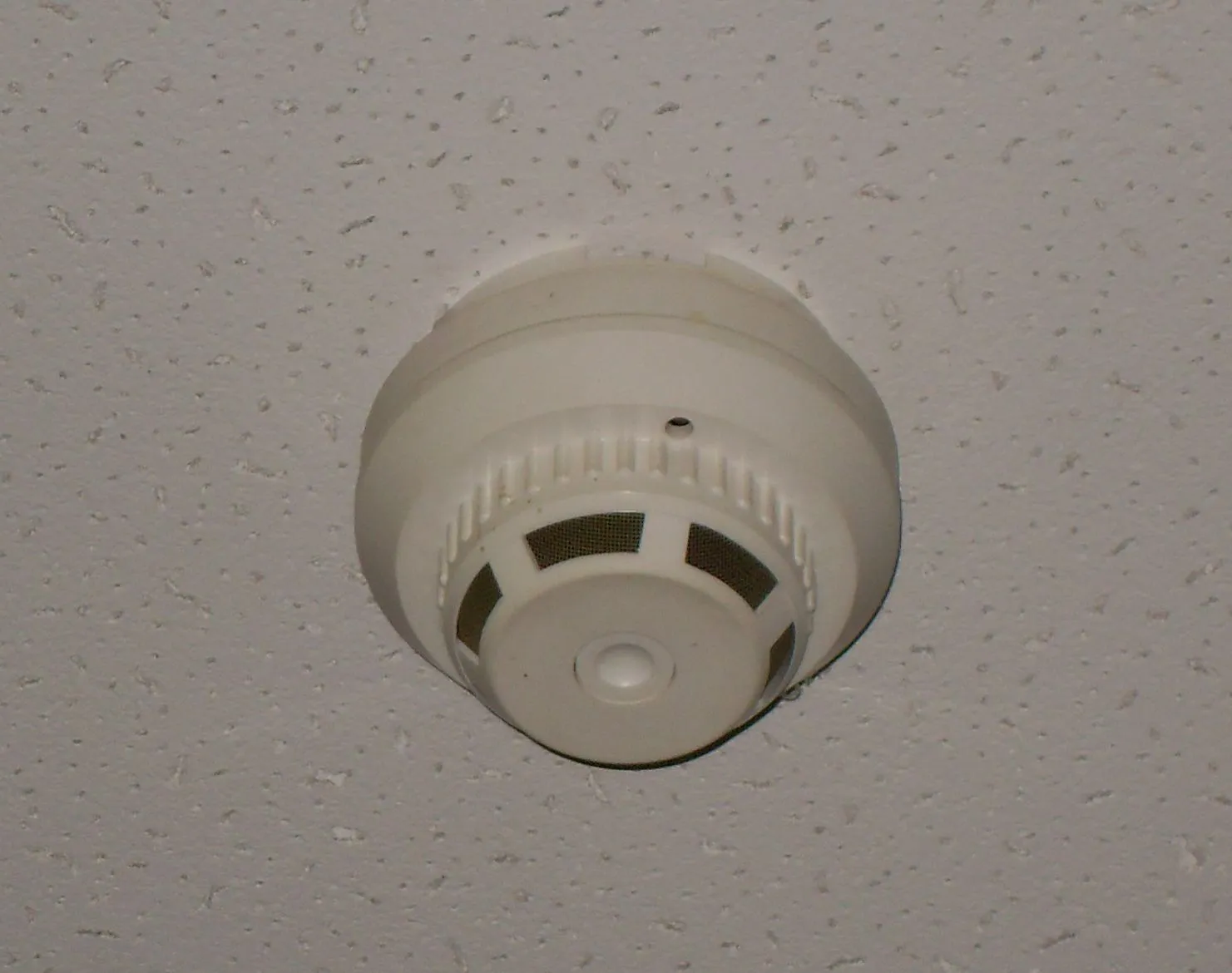

Quick answer: buy smoke alarms certified to the current UL 217 standard, put one inside and outside every bedroom and on every level [1], and link them so they all sound together [1]. For most homes that means a sealed 10-year battery alarm where there’s no wiring, and a hardwired alarm with a 10-year backup battery where there is. When an alarm sounds, you may have less than 2 minutes to get everyone out [1].
At a glance
- Where they go
- Inside and outside each bedroom and sleeping area, and on every level [1]
- Testing
- Push the test button monthly [1]
- Replace the whole alarm
- Every 10 years [1]
- Batteries
- Replace 9-volt or backup batteries at least once a year, unless sealed [1]
- Time to get out
- Possibly less than 2 minutes once an alarm sounds [1]
- Standard to look for
- UL 217; the 2025 NFPA 72 code requires the newer edition with a cooking smoke test [2]
How we chose these alarms
We didn’t install or test these alarms. We picked them from the makers’ data sheets, testing-lab certificates and the CPSC recall list.
- A current UL 217 certificate. Newer editions of UL 217 add a cooking nuisance smoke test: alarms are mounted 10 feet from an electric range cooking hamburger patties and must not sound too early [2]. Every pick has a published Intertek certificate to UL 217’s 10th edition (2024) [5][8][12].
- A photoelectric sensor and an 85-decibel horn, per each maker’s spec sheet. The U.S. Fire Administration recommends either both ionization and photoelectric alarms or dual-sensor alarms [1], so a home with only photoelectric alarms could add an ionization or dual-sensor model.
- No battery that dies in a power outage: sealed 10-year batteries, or hardwired power with a battery backup.
- No recall. We searched the CPSC’s recall list for each brand and model on November 6, 2026, and left out anything recalled [13].
All four picks are Kidde DETECT models, because Kidde publishes a data sheet and a lab certificate for each one. That’s not a judgment against other established brands; check any alarm’s box for a UL 217 listing mark.
Our smoke alarm picks
Best for: Bedrooms and hallways with no wiring for alarms
Kidde Smoke Alarm, 10-Year Battery Powered (20SD10)
It runs on a sealed battery for its 10-year life, so there's no battery to change or forget, and it chirps when it's time to replace the alarm. Kidde says the sensing reduces false alarms often caused by cooking, and it remembers if it went off in the last 24 hours [3][4].
- Photoelectric sensor; 85 dB at 10 ft [4]
- 10-year sealed battery; 10-year limited warranty (battery included) [4]
- Hush button silences a nuisance alarm for about 8 to 10 minutes [4]
- Self-testing, plus end-of-life chirp 10 years after it's powered [4]
- 5 x 5 x 2 inches, 0.79 lb; twist-and-click mounting [4]
Safety check: Certified by Intertek to UL 217 (10th edition, 2024) per its Authorization to Mark; no CPSC recall found for this model (checked 2026-11-06).
Watch out: It can't be linked to other alarms. Kidde notes its 10-year figure is the warranty, not a battery performance claim, and still says to push the test button weekly [4].
See it on Amazon → We chose it from specs and safety records; we haven't tested it ourselves.
Best for: Replacing old hardwired alarms on the same wiring
Kidde Smoke Alarm, Hardwired with 10-Year Backup Battery (20SA10)
It runs on 120-volt house power with a sealed 10-year backup battery, so it keeps working in an outage without yearly battery swaps. Wired alarms sound together: when one goes off, they all do [6].
- 120 V AC with 10-year sealed battery backup [6]
- Photoelectric sensor; 85 dB at 10 ft [6]
- Interconnects with up to 24 Kidde devices [6]
- Plug-in quick connector; fits a single-gang box up to a 4-inch octagon box [6]
- 10-year limited warranty [6]
Safety check: Certified by Intertek to UL 217 (10th edition, 2024) per its Authorization to Mark; no CPSC recall found for this model (checked 2026-11-06).
Watch out: Kidde says it isn't designed to interconnect with other brands' alarms, so plan to replace every alarm on the circuit. All alarms must be on one non-switched circuit that isn't protected by a GFCI [6].
See it on Amazon → We chose it from specs and safety records; we haven't tested it ourselves.
Best for: Linking alarms in an older home or rental without running new wires
Kidde Wire-Free Interconnect Smoke Alarm, AA Battery (20SDR-VRF)
These alarms link by radio, so when one sounds, all compatible alarms do, with no wiring between them. Kidde says it can help meet code for renovations under NFPA 72, and a voice says why it's sounding [7][9].
- Photoelectric sensor; 85 dB at 10 ft [9]
- 2 AA alkaline batteries (included, replaceable) [9]
- Wire-free network of up to 12 smoke or combo alarms, per Kidde [7]
- Voice alerts, including "Fire!" and "Low Battery" [9]
- End-of-life chirp 10 years after it's powered [9]
Safety check: Certified by Intertek to UL 217 (10th edition, 2024) per its Authorization to Mark; no CPSC recall found for this model (checked 2026-11-06).
Watch out: Kidde says to change the batteries every 6 months and not to use lithium batteries. It isn't recommended for mobile homes, and every alarm in the network needs the wire-free feature [7][9].
See it on Amazon → We chose it from specs and safety records; we haven't tested it ourselves.
Best for: A bedroom for someone who is deaf or hard of hearing
Kidde Strobe Smoke Alarm, Hardwired with 10-Year Battery (50SA10-S)
It adds a 177-candela strobe that flashes once a second during an alarm, and interconnected strobes flash together. Kidde says the strobe meets ADA visibility requirements [10][11].
- 177 candela synchronizing LED strobe [11]
- Photoelectric sensor; 85 dB at 10 ft [11]
- 120 V AC with sealed 10-year backup battery [11]
- Interconnects with up to 24 Kidde devices [11]
- 10-year limited warranty [11]
Safety check: Certified by Intertek to UL 217 (10th edition, 2024) and UL 1638 for visible signals per its Authorization to Mark; no CPSC recall found for this model (checked 2026-11-06).
Watch out: The strobe doesn't flash if AC power is off; the alarm still sounds on battery [11]. It needs hardwiring.
See it on Amazon → We chose it from specs and safety records; we haven't tested it ourselves.
Which type fits your home
| Model | Power | Links to other alarms | Extra |
|---|---|---|---|
| Kidde 20SD10 | Sealed 10-year battery | No | Hush, alarm memory |
| Kidde 20SA10 | Hardwired, 10-year backup | Wired, up to 24 Kidde devices | Plug-in quick connector |
| Kidde 20SDR-VRF | 2 AA batteries | Wire-free radio link | Voice alerts |
| Kidde 50SA10-S | Hardwired, 10-year backup | Wired, up to 24 Kidde devices | 177 cd strobe |
Buying and placement tips
- Count the alarms first. One inside each bedroom, one outside each sleeping area and one on every level, including the basement [1]. A two-story house with three bedrooms can need five or more.
- Keep them away from the stove. The 2025 NFPA 72 code says smoke alarms shall not be installed within 10 feet of a fixed cooking appliance unless there’s no other place, and then only alarms listed for nuisance-alarm resistance may go 6 to 10 feet away [2].
- Check the age. Replace any alarm that’s 10 years old [1]. Kidde’s DETECT alarms also chirp when they reach 10 years after first being powered [4].
- For hearing loss, look beyond sound. The U.S. Fire Administration notes alarms for people who are deaf or hard of hearing may have strobe lights that flash or vibrate [1].
What to avoid
- No-name alarms sold only online. The CPSC announced a 2026 recall of about 11,000 LShome photoelectric alarms sold on Amazon that could fail to warn during a fire [16], and a 2025 recall of about 328,000 Samurai Mini alarms sold by HSN [17].
- Older recalled Kidde models. Kidde recalled its TruSense alarms (model series 2040, 2050, 2060 and 2070) in 2021 [14] and its PI2010 and PI9010 dual-sensor alarms in 2018 [15]. If you have one, check the model on the back against the CPSC notice. None of our picks are in those recalls.
- Silencing nuisance alarms the wrong way. Use the hush button, which quiets the 20SD10 for about 8 to 10 minutes [4]. If cooking smoke sets an alarm off often, check whether it’s within 10 feet of the stove [2].
Sources
- U.S. Fire Administration (FEMA): Smoke Alarms
- UL Standards & Engagement: UL Smoke Alarm Standards Required by 2025 NFPA Fire Alarm and Signaling Code (December 20, 2024)
- Kidde: Smoke Alarm, 10-Year Battery Powered (20SD10)
- Kidde: 20SD10 product data sheet
- Intertek: Authorization to Mark, Kidde DETECT smoke alarms 20SD10 and 20SA10 (UL 217:2024 Ed. 10)
- Kidde: 20SA10 product data sheet
- Kidde: Smoke Alarm, Wire-Free Interconnect, AA Battery Powered (20SDR-VRF)
- Intertek: Authorization to Mark, Kidde wire-free smoke alarms including 20SDR-VRF (UL 217:2024 Ed. 10)
- Kidde: 20SDR-VRF product data sheet
- Kidde: Strobe Smoke Alarm (50SA10-S)
- Kidde: 50SA10-S product data sheet
- Intertek: Authorization to Mark, Kidde 50SA10-S strobe smoke alarm (UL 217:2024 Ed. 10 and UL 1638:2023)
- U.S. Consumer Product Safety Commission: Recalls
- CPSC: Kidde Recalls TruSense Smoke and Combination Smoke/CO Alarms (May 6, 2021)
- CPSC: Kidde Recalls Dual Sensor Smoke Alarms (March 21, 2018)
- CPSC: LShome Photoelectric Smoke Detector Fire Alarms Recalled (February 12, 2026)
- CPSC: Three61 Recalls Samurai Mini Smoke Alarms (January 16, 2025)
Common questions
Where should smoke alarms go in a house?
The U.S. Fire Administration says to put smoke alarms inside and outside each bedroom and sleeping area, on every level of the home, and on the ceiling or high on the wall.
How often should I replace my smoke alarms?
Every 10 years, according to the U.S. Fire Administration. Many current alarms beep or chirp on their own when they reach 10 years after first being powered.
Do I need interconnected smoke alarms?
The U.S. Fire Administration recommends them, so that when one alarm sounds, they all sound. Homes without wiring between alarms can use wire-free interconnect models that link by radio.
What is the new smoke alarm standard?
UL 217 is the safety standard for home smoke alarms. Its newer editions add a cooking nuisance smoke test, and the 2025 edition of the NFPA 72 fire alarm code requires alarms that meet those newer requirements in places that adopt it.