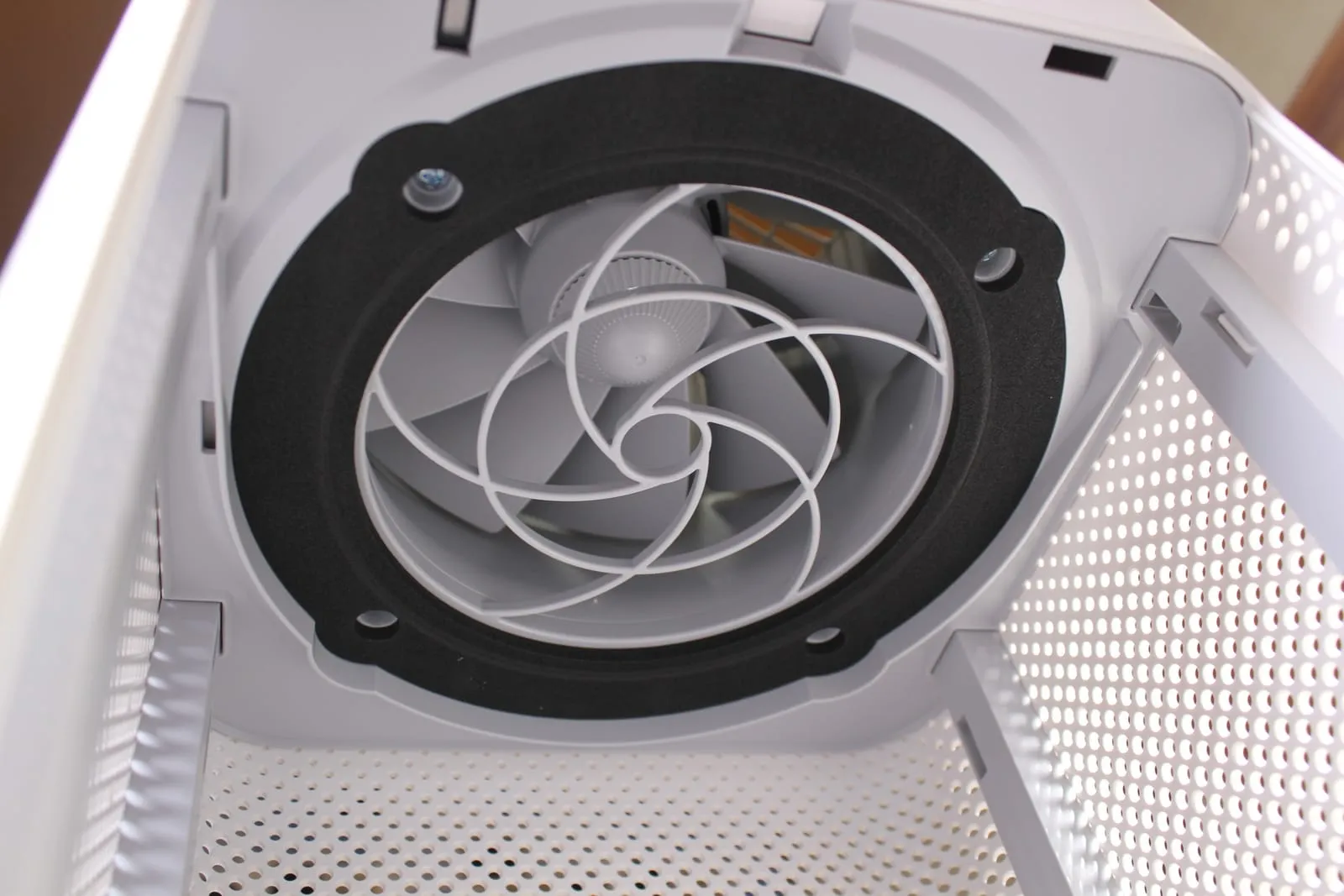

Quick answer: measure the room, then buy a HEPA purifier whose tested room size or CADR covers it. EPA says a higher CADR means a purifier can serve a larger area, and to size up for ceilings over 8 feet [1]. If you’d rather avoid any added ozone, choose a filter-only model; EPA notes that ionizers can emit ozone [1].
At a glance
- HEPA filter
- At least 99.97% of 0.3-micron particles, in theory [2]
- How to size
- Room length × width; size up for ceilings over 8 feet [1]
- Ozone check
- ENERGY STAR records each certified model's ozone output [3]
- Low-ozone list
- California Air Resources Board certified air cleaners [1][4]
- Energy data
- ENERGY STAR certified room air cleaners [3]
Selection criteria
We built this list from lab-tested numbers and public safety records. We didn’t test these purifiers ourselves.
- A true HEPA filter. EPA describes HEPA, as the Department of Energy defines it, as a filter that can theoretically remove at least 99.97% of particles 0.3 microns across [2]. Some purifiers say “HEPA-type” instead; ENERGY STAR’s data separates the two [3]. Each pick here is listed as HEPA by ENERGY STAR or sold as true HEPA by its maker [3][7][8][9].
- Tested CADR and room size. We use the room sizes and CADRs in ENERGY STAR’s data, and note where a maker’s own figure differs [3][7][8].
- California’s ozone list. Every pick is on the California Air Resources Board’s list of certified air cleaning devices, which CARB marks as “mechanical” (filter only) or “electronic” [4].
- Energy use from ENERGY STAR where the model is certified [3].
- A clean recall record. On November 6, 2026, we looked up every brand and model in the CPSC’s recall database; none of the picks has a recall [5].
Purifiers we picked
Best for: A bedroom, with no ionizer
Levoit HEPA Air Purifier (LAP-C341S)
It's a fan-and-filter purifier with a filter ENERGY STAR lists as HEPA, rated for a 250-square-foot room. ENERGY STAR records zero ozone and 145 kWh of electricity a year, and CARB lists it as mechanical [3][4].
- Room size 250 sq ft (ENERGY STAR) [3]
- CADR: smoke 161, dust 161, pollen 172 [3]
- 145 kWh per year; 0.00 ppb ozone [3]
- HEPA filter; fan and filter only [3]
- CARB certified, mechanical (2026) [4]
Safety check: ENERGY STAR certified (May 2026) and CARB certified [3][4]; no CPSC recall found for Levoit or VeSync (checked 2026-11-06).
Watch out: Look for model number LAP-C341S on the listing or box; Levoit sells it under a marketing name. ENERGY STAR lists it without Wi-Fi or an auto mode [3].
See it on Amazon → We chose it from specs and safety records; we haven't tested it ourselves.
Best for: A living room, filter-only
Medify MA-40 Air Purifier with True HEPA H13 Filter
It's a fan-and-filter purifier with no ionizer, and CARB lists it as mechanical. ENERGY STAR rates it for a 380-square-foot room and records zero ozone [3][4].
- Room size 380 sq ft (ENERGY STAR, model MA-40-V4.0) [3]
- CADR: smoke 245, dust 257, pollen 263 [3]
- 261 kWh per year; 0.00 ppb ozone [3]
- Sold by Medify as True HEPA H13 [9]
- CARB certified, mechanical (MA-40-V4.0, 2025) [4]
Safety check: ENERGY STAR certified (August 2025) and CARB certified [3][4]; no CPSC recall found for Medify Air (checked 2026-11-06).
Watch out: ENERGY STAR files its filter as HEPA-type, not HEPA, even though Medify sells it as True HEPA H13 [3][9]. The certifications are for version 4.0, so look for MA-40-V4.0 on the box. ENERGY STAR lists a timer but no sensor-driven auto mode [3].
See it on Amazon → We chose it from specs and safety records; we haven't tested it ourselves.
Best for: A smart purifier you can check from your phone
Winix T810 4-Stage True HEPA Air Purifier
It's ENERGY STAR certified, works with Wi-Fi, Alexa and Google Home, and shows air quality as a number and a color. Winix reports its ozone output as 0.38 ppb over 8 hours in a test chamber [7].
- AHAM Verifide room size 418 sq ft [7]
- CADR: dust 265, pollen 267, smoke 272 [7]
- True HEPA and activated carbon, each rated for 12 months [7]
- Wi-Fi, Alexa, Google Home; 23.8 dB minimum [7]
- ENERGY STAR: 259 kWh per year [3]
Safety check: ENERGY STAR certified [3]; CARB certified as an electronic air cleaner (2023) [4]; no CPSC recall found for Winix (checked 2026-11-06).
Watch out: It includes PlasmaWave, so CARB lists it as electronic, and ENERGY STAR records 1.35 ppb ozone in its test [3][4]. Pick the Medify or Fellowes if you want filter-only.
See it on Amazon → We chose it from specs and safety records; we haven't tested it ourselves.
Best for: Open-plan living spaces and large rooms
Fellowes AeraMax SV Air Purifier with True HEPA Filter
It has the highest CADR on this page, and ENERGY STAR lists its filter as HEPA with zero ozone. It's filter-only, CARB lists it as mechanical, and an air quality sensor runs its auto mode [3][4][8].
- Room size 803 sq ft (ENERGY STAR); Fellowes's manual says 970 sq ft [3][8]
- CADR: smoke 518, dust 512, pollen 450 (ENERGY STAR) [3]
- Two combination True HEPA and carbon filters, about 2-year life; 4 washable pre-filters [8]
- AeraSmart sensor; 4 speeds; auto, sleep and child lock [8]
- 490 kWh per year; 0.00 ppb ozone [3]
Safety check: ENERGY STAR certified (June 2024) and CARB certified, mechanical (2023) [3][4]; no CPSC recall found for the AeraMax SV (checked 2026-11-06). Fellowes's only CPSC recall we found is for 2010 heated footrests.
Watch out: It's a floor unit Fellowes also sells for offices, and it uses the most electricity on this page. Fellowes lists 67 dB at the top speed [3][8]. Replacement filters come as a two-pack.
See it on Amazon → We chose it from specs and safety records; we haven't tested it ourselves.
Sizing a purifier
- Use the tested room size. ENERGY STAR publishes a room size for every certified model from its lab-tested CADR [3]. Makers’ own figures can be bigger: Fellowes’s manual says 970 square feet for the AeraMax SV, while ENERGY STAR lists 803 [3][8]. When the numbers differ, size by the smaller one.
- Ignore one-hour claims. Listings that say a purifier “cleans” a huge area in an hour describe far fewer air changes than a tested room size.
- Measure, then size up for tall ceilings. EPA says to multiply length by width and choose a larger unit if the ceiling is over 8 feet [1].
Before you buy
- Skip anything sold as an ozone generator. EPA says to avoid air cleaners that intentionally produce ozone, a lung irritant [1]. California’s list shows cleaners tested to emit little or no ozone [1][4].
- Budget for filters. EPA says all filters need regular replacement [1].
- Check recalls. The CPSC recalled Aroeve air purifiers in 2026 because they could overheat and catch fire [6]. Search cpsc.gov/Recalls by brand before you buy [5].
Sources
- U.S. EPA: Guide to Air Cleaners in the Home (updated October 1, 2026)
- U.S. EPA: What is a HEPA filter?
- ENERGY STAR: Certified Room Air Cleaners data set
- California Air Resources Board: List of CARB-Certified Air Cleaning Devices
- U.S. Consumer Product Safety Commission: Recalls
- CPSC: Airova Recalls Aroeve Air Purifiers Due to Fire and Burn Hazards (2026)
- Winix: T810 4-Stage True HEPA Air Purifier
- Fellowes: AeraMax SV Air Purifier operator's manual (specifications)
- Medify: MA-40 Air Purifier with True HEPA H13 Filter (Medify's Amazon listing)
Common questions
What size air purifier do I need?
Multiply the room's length by its width, then pick a purifier whose tested room size (or CADR) covers that area. EPA says to size up if your ceilings are higher than 8 feet. Ignore 'cleans up to X square feet in an hour' claims; those describe far fewer air changes than the tested room size.
What does a true HEPA filter catch?
EPA says a HEPA filter, as defined by the Department of Energy, can theoretically remove at least 99.97% of particles 0.3 microns across, the size that's hardest to catch.
Do air purifiers make ozone?
Filter-only purifiers don't add ozone on purpose. EPA says to avoid air cleaners that intentionally produce ozone and notes that ionizers and some other electronic cleaners can emit it. California keeps a list of air cleaners tested to emit little or no ozone.
How often do I replace an air purifier filter?
Follow the maker's schedule. EPA says all filters need regular replacement. Winix rates the T810's HEPA filter for about 12 months, and Fellowes rates the AeraMax SV's combination filters for about 2 years.